Jump to content

Request To Old Time Bt Fans.


  • You cannot reply to this topic
16 replies to this topic

#1 Koniving

    Welcoming Committee

  • PipPipPipPipPipPipPipPipPipPipPipPipPip
  • The Guide
  • The Guide
  • 23,384 posts

Posted 30 July 2015 - 07:12 AM

Koniving here. Many of you know me as the sometimes white knight for PGI, sometimes extremely cynical toward PGI, and always BT-obsessed resident of the new player help threads who usually has ideas that are sometimes good, bad or just different about MWO and how a "BT" simulation might work.

Today I'm here because I need a resource that I do not know how to find.

First let me state that I'm aware of the "Classic Battletech Tech Manual" furnished by Catalyst Games. I have this resource. It's also making me rip my hair out due to how much it conflicts with information about classic BT from FASA-created sources, and the very modernized-fantasy approach some aspects have (versus the gritty, semi-realistic fantasy of the late 1980s to early 1990s). In short: Information I'm finding in it conflicts lightly to heavily with older, FASA-created materials.

Are there older versions of the Tech Manual, say from the 90s (pre-wiz kidz please) or even the 80s?
If at all possible, I would like to request some reference information from someone who has it, or find someone who knows how to find and obtain the oldest version(s) of the Tech Manual.

I'm looking for FASA-specific material if at all possible. Things dated at the 1st, 2nd, or 3rd generation BT tabletop (not the 4th or 5th).

If older tech manuals do exist, cannot be obtained and yet someone has it, then:
Specifically I am looking for all articles relating to the Cockpit (especially controls), Diagnostic Interpretation Computer, Sensor System, C3 if possible, (from any FASA-created tech manual predating the Wizkidz Buyout), Autocannon (specifically explanation on minimum ranges), standard PPC and ER PPC, ECM / BAP if possible (I know they've changed many times with several generations of rules), and finally "Omnimech" versus "Battlemech".

Again, I repeat that if there is a FASA-created Tech Manual -- that's what I'm interested in. I already have the Catalyst Games Tech Manual.

Edited by Koniving, 30 July 2015 - 07:13 AM.


#2 SnagaDance

    Member

  • PipPipPipPipPipPipPipPip
  • Little Helper
  • Little Helper
  • 1,860 posts
  • LocationThe Netherlands

Posted 30 July 2015 - 09:39 AM

There's Maximum Tech, released in 1997 with revised editions in 1998 and 2005, maybe that has the technical background to your questions? (I don't know as I don't own it)

#3 VinJade

    Member

  • PipPipPipPipPipPipPipPip
  • 1,211 posts

Posted 30 July 2015 - 10:57 AM

shouldn't the BT Master Rules revised cover that?
it's been a while since I had my Master rules revised edition so I cannot remember, any other old school BTer might have one.

#4 Rorik Thrumsalr

    Member

  • PipPipPipPipPip
  • 184 posts
  • LocationUnited States

Posted 30 July 2015 - 07:32 PM

Koniving, let me check my sources.

Edited by Rorik Jorgensson, 30 July 2015 - 07:33 PM.


#5 Rorik Thrumsalr

    Member

  • PipPipPipPipPip
  • 184 posts
  • LocationUnited States

Posted 30 July 2015 - 07:58 PM

Ok, I've got pdf's of the following 2nd and 3rd edition books:

3050 TRO (here they introduce much of the equipment you're looking for)
3025TRO
3055TRO
2750TRO
3025TRO

'94 edition of "the invading Clans"
Mercenaries handbook and a slew of other merc unit handbooks.

Anything pique your interest?

#6 Koniving

    Welcoming Committee

  • PipPipPipPipPipPipPipPipPipPipPipPipPip
  • The Guide
  • The Guide
  • 23,384 posts

Posted 02 August 2015 - 04:31 PM

View PostRorik Jorgensson, on 30 July 2015 - 07:58 PM, said:

Anything pique your interest?

It'd figure I'm checking right before having to leave for work. Will get back to you tomorrow as it's an overnight shift.
(Will also need to check mine to see if they are FASA era or Catalyst/WizKidz reprints).

#7 Koniving

    Welcoming Committee

  • PipPipPipPipPipPipPipPipPipPipPipPipPip
  • The Guide
  • The Guide
  • 23,384 posts

Posted 03 August 2015 - 03:38 PM

View PostVinJade, on 30 July 2015 - 10:57 AM, said:

shouldn't the BT Master Rules revised cover that?
it's been a while since I had my Master rules revised edition so I cannot remember, any other old school BTer might have one.

I'm not certain since I don't have a book called BT Master Rules. What I'm digging for is the lore behind the technology; or at least the original version.

For example in the late 1980s, the reason that a "PPC" has a Minimum ACCURACY Penalty range is because a Particle Projection Cannon is both very heavy and often very long and large. Specifically:
"The PPC's weight creates an added disadvantage at extremely short ranges. The weapon is so heavy and bulky that it is difficult for the mech to move the weapon quickly enough to align with rapidly-moving targets at ranges of less than about 90 meters. For this reason, accuracy with PPCs actually tends to decrease at a range of 90 meters or less."

The superiority of its accurate range over most autocannons of equivalent overtime damage potential is because ion particles travel faster than explosive shells. (Both autocannons and PPCs are explained to have ranges of several kilometers but the likelihood of hitting something as "small and as fast as a Battlemech with even the greenest pilot inside" is slim at best. PPCs 'thereotically have unlimited range', but energy dissipates with travel through the atmosphere. [An obvious sampling of the time's Tesla craze, as many things of science fiction had as fuel in the late 70s to late 80s. Generators in the movies Alien, Aliens, etc? Inspired by descriptions of Tesla's failed attempts at a world wide wireless power generator.)

ER PPCs, on the other hand, had the weight more distributed so it wasn't focused all in one place, putting less bulk in one spot and thus allowing the mech to be more agile with maneuvering it.

Solid. Has some issues that could be explained away (like how can a mech tot 4 of these on the arms without issue?), but otherwise quite reasonable. This was also for the early 90s.
--------------
In the mid 90s around when FASA decided to tweak with the balance here, this became "PPCs generate enormous amounts of heat, enough so that they could potentially explode due to feedback. Thus they are outfitted with safety systems called field inhibitors." Blah, blah. "The field inhibitor degrades the performance of the weapon," Then there's some stuff from different (at the time) official sources about different field inhibitors, where one delays its firing by prolonging the energy buildup into a sequence of 2 or 3 stages before firing. Another claims that it degrades the beam into a narrower field before allowing it to expand (lore-wise making a tight nit hit, enlarging over the span of a second [with potential of spreading the damage]).

This sort of 'newer' version also says that ER PPCs don't need field inhibitors because they fixed the feedback problem and the additional range is because hot stuff is hot. (Not exactly how it was said but the explanation is pretty much that tacky).

The conflict in the lore is resolved by Catalyst saying that their stuff supersedes older sources. Such is always the case in an ongoing IP like this.

My issue is that while 1980s Battlemechs are described much akin to "Real Robot" genre animes such as the 08th MS Team [one of the best gundam animes in my opinion far as how the machines work and the physics involved], the 1990s Battlemechs were described as clunky, clumsy machines that fall over all the time, and the Catalyst games Battlemechs are "intelligent enough to read the intentions of the pilotthrough the neurohelmet."

Tech Manual; Page 40 said:

"As I'll describe later, 'Mechs generally have enough intelligence to recognize a simple 'Grab Command' as aimed by a control stick and crosshairs, and can thus pick up improvised clubs or cargo without detailed input from the mechwarrior."


It's true, both old and new versions take a page from PatLabor (one of many heavy inspirations for how Battlemechs work, and the inspiration for commercial use Battlemechs) in finer hand manipulation as demonstrated here.

It seems that newer sources say this is not a requirement for combat and only needed for delicate operations, since grabbing a random club is as simple as 'point and click' with the grab switch enabled.
However in older novels I recall reading that this was a general issue with switching from standard combat to melee and not being able to switch the activation of the hand manipulators of the gloves caused some accidental casualties.

So I wanted to see if there was an original Tech Manual before Wiz Kidz? (Actually thought the one I had was Catalyst's, but actually I have a FanPro / WizKidz Tech Manual dated 2007).

Anyway, I trust Wizkidz's stuff about as much as I trust a 2 inch pipe to properly feed a septic tank the waste water from a toilet, sink and bathtub. (Which if the metaphor isn't clear; it means the material is about worthless in my eyes.) After all... this about sums up their understanding of how machines work:
Posted Image
This is just a random sample. Throughout most of Wizkidz material, from mech scale in art and descriptions to utterly ludicrous concepts for how things work which borrow heavily not from the mindset of the original product but from the mindset of 'new age', vastly changing how things look, feel, and are.

A solid example is removing the sleek, rounded looks of machines for blockier appearances with lots of flat surfaces. Yes this has attraction, but from a combat perspective the fact that the surfaces were rounded made them difficult to penetrate. The angles given to armor is meant to prevent maximum penetration from being achieved; circular shapes and curved materials such as the rounded forearms of the Hunchbacks help to ensure that regardless of the angle of attack, the arms are equally protected from direct fire. The rectangular prisms of MWO's "modern" design would allow maximum penetration to occur at 4 specific angles; two of which are always available to be shot at due to the static position the arms operate in.

We've essentially replaced post-modern curved armor (currently economically infeasible due to difficulty in replacing) with world war II sloped armor... or at least Wiz Kids did this. MWO has gone even farther back, removing even that tactical advantage with many flat, vertical surfaces.
(A video which has a number of types, including the purpose of angling armor and 'sloped' armor as a WW II concept that is still in use today.)


View PostRorik Jorgensson, on 30 July 2015 - 07:58 PM, said:

Anything pique your interest?


See above.
I seem to have all of those TROs + a 3060 and 3067.

There are notes of particular weapon variants and good details on the weapons. Such as the fact that the Jenners use Argra 3L medium lasers on directionally variable mountings (thus meaning they can aim left/right up/down despite not having lower arm actuators), though before this they used Argra 27C MLs and a centrally mounted Diplan HD Large Laser turret. They also cover special traits of more unique cockpits, much to my delight. An example is the extra insulation that the Crab has from heat sources as well as two methods of ejection.

Useful details. But doesn't quite hit the core details I'm looking for.

Does a pre-2007 Tech Manual exist? Was there one in the 90s or 80s?

(Side note: Evidently, Jenners have rotating heads....)

Edited by Koniving, 03 August 2015 - 07:19 PM.


#8 parafighter

    Rookie

  • 3 posts

Posted 04 August 2015 - 05:06 PM

I came in to battletech around the time Wizkids pick up the franchise but I'll see if I can answer your questions.

The Tech Manual didn't exist before 2007.

The books you are probably looking for are:

http://www.sarna.net/wiki/Battledroids

http://www.sarna.net...ch,_2nd_Edition

http://www.sarna.net...ules_of_Warfare

http://www.sarna.net...Tech_Compendium

You can find more books here: http://www.sarna.net...leTech_products

I do have a second edition box set rulebook so I'll answer some questions.

The Neurohelmet is said to beam info from the battlemech directly to the pilot and translates the mechwarriors brain in to movement and combat commands. "In a sense, while wearing the helmet, the MechWarrior controls the 'Mech as if it were his or her own boby.

The computer section is vague, It talks about how simple they are but say that some sill functioning Star League computers are very advanced.

Sensors are have a lot of sensors "including; light-intensifier optics, and laser range-finding systems." "Fire-and-forget weapons no longer exists."

PPC's are simply called "charged particle beam weapons" and autocannons "rapid-fire".

I hope this helps.

#9 Wildstreak

    Member

  • PipPipPipPipPipPipPipPipPipPip
  • Civil Servant
  • Civil Servant
  • 5,154 posts

Posted 04 August 2015 - 06:01 PM

View PostKoniving, on 03 August 2015 - 03:38 PM, said:

I'm not certain since I don't have a book called BT Master Rules. What I'm digging for is the lore behind the technology; or at least the original version.

For example in the late 1980s, the reason that a "PPC" has a Minimum ACCURACY Penalty range is because a Particle Projection Cannon is both very heavy and often very long and large. Specifically:
"The PPC's weight creates an added disadvantage at extremely short ranges. The weapon is so heavy and bulky that it is difficult for the mech to move the weapon quickly enough to align with rapidly-moving targets at ranges of less than about 90 meters. For this reason, accuracy with PPCs actually tends to decrease at a range of 90 meters or less."

The superiority of its accurate range over most autocannons of equivalent overtime damage potential is because ion particles travel faster than explosive shells. (Both autocannons and PPCs are explained to have ranges of several kilometers but the likelihood of hitting something as "small and as fast as a Battlemech with even the greenest pilot inside" is slim at best. PPCs 'thereotically have unlimited range', but energy dissipates with travel through the atmosphere. [An obvious sampling of the time's Tesla craze, as many things of science fiction had as fuel in the late 70s to late 80s. Generators in the movies Alien, Aliens, etc? Inspired by descriptions of Tesla's failed attempts at a world wide wireless power generator.)

ER PPCs, on the other hand, had the weight more distributed so it wasn't focused all in one place, putting less bulk in one spot and thus allowing the mech to be more agile with maneuvering it.

Solid. Has some issues that could be explained away (like how can a mech tot 4 of these on the arms without issue?), but otherwise quite reasonable. This was also for the early 90s.
--------------
In the mid 90s around when FASA decided to tweak with the balance here, this became "PPCs generate enormous amounts of heat, enough so that they could potentially explode due to feedback. Thus they are outfitted with safety systems called field inhibitors." Blah, blah. "The field inhibitor degrades the performance of the weapon," Then there's some stuff from different (at the time) official sources about different field inhibitors, where one delays its firing by prolonging the energy buildup into a sequence of 2 or 3 stages before firing. Another claims that it degrades the beam into a narrower field before allowing it to expand (lore-wise making a tight nit hit, enlarging over the span of a second [with potential of spreading the damage]).

This sort of 'newer' version also says that ER PPCs don't need field inhibitors because they fixed the feedback problem and the additional range is because hot stuff is hot. (Not exactly how it was said but the explanation is pretty much that tacky).

The conflict in the lore is resolved by Catalyst saying that their stuff supersedes older sources. Such is always the case in an ongoing IP like this.

I have no idea where this "original version" comes from. Ever since I played CBT when FASA ran it, the part about Field Inhibitors has always been there especially when they came out with rules allowing turning the Inhibitor off.

Earliest I know it was mentioned is in this FASA Rulebook though I believe Inhibitors were mentioned before that.

Edited by Wildstreak, 04 August 2015 - 06:04 PM.


#10 Dirk Le Daring

    Member

  • PipPipPipPipPipPipPipPipPip
  • 2,083 posts
  • LocationAustralia

Posted 04 August 2015 - 06:15 PM

I'm not gonna post any links Koniving, but I just did a quick search for "first edition fasa battletech tech manual", (first editions are a good place to start) There may be an early edition on ebay, that's what I was aiming to find, but it's a start.

There may be identical second editions cheaper, but worth a look.

And for those that do not understand, I am not talking about anything other than print runs.

Anyway, it may help.

#11 Koniving

    Welcoming Committee

  • PipPipPipPipPipPipPipPipPipPipPipPipPip
  • The Guide
  • The Guide
  • 23,384 posts

Posted 04 August 2015 - 06:23 PM

View PostWildstreak, on 04 August 2015 - 06:01 PM, said:

I have no idea where this "original version" comes from. Ever since I played CBT when FASA ran it, the part about Field Inhibitors has always been there especially when they came out with rules allowing turning the Inhibitor off.

Earliest I know it was mentioned is in this FASA Rulebook though I believe Inhibitors were mentioned before that.


"The BattleTech Tactical Handbook was the first expansion to the BattleTech board game that included so called Level 3 optional rules and equipment." First published 1994.

This, posted 1987 by First Battletech Novelist William H. Keath and edited by several of those responsible for the 2nd generation Battletech rules (1st gen being "BattleDroids").
Posted Image

Both first author and artist for the franchise.
Posted Image

Quote

The first official BattleTech novel was William H. Keith's Decision at Thunder Rift (1986)


o.O; Field inhibitors were an addition as part of the optional rules set, well after 2nd gen. Not sure if 3rd gen onward or 4th gen onward.

They have no mention, and even if they existed they were never given a function or purpose in terms of game rules or affect on accuracy until later -- in which they changed the fundamental reasoning behind why PPCs had the issue.

At the time of this 1987 writing, almost all PPCs were hand-held detachable weapons that could be picked up and dropped like clubs and axes. Clans and mechs like the Vindicator and Awesome were among the only ones that had built-in PPCs. It was sort of a transitional phase for BT prior to the Harmony Gold stuff. Anyway because PPCs were hand-held and had almost all of their weight focused (unlike LPLs which had some of the weight where it actually is, with a lot of that weight in cabling and other stuff that runs throughout the mech to the engine)... PPCs were just too bulky to track and aim well.

Edited by Koniving, 04 August 2015 - 06:29 PM.


#12 The Lost Boy

    Member

  • PipPipPipPipPipPipPip
  • Overlord
  • Overlord
  • 587 posts

Posted 06 August 2015 - 09:39 PM

I have the last version FASA printed of Battletech Rules of Warfare, before they closed shop, if there is anything in there specifically you are looking for. And most of the original FASA, TROs. Just let me know.

#13 Neutron IX

    Member

  • PipPipPipPipPipPipPipPip
  • Overlord
  • Overlord
  • 1,019 posts
  • Location"Soylent Green. It's what's for dinner."

Posted 08 August 2015 - 09:45 AM

Is Cray still around on the BT forums? That guy is the veritable "Keeper" of all BT tech related questions.

Maybe ask around over there if you haven't yet?

#14 SpiralFace

    Member

  • PipPipPipPipPipPipPipPip
  • The Devoted
  • The Devoted
  • 1,151 posts
  • LocationAlshain

Posted 09 August 2015 - 01:16 PM

Hey Koniving, some answers for you.

There are no direct "tech manuals" from older fasa publications. Construction rules where typically thrown in with the main rulebooks. (Litterally everything up till Total war had them.) Some fiction was splashed around here and there, but I'll do my best to cite sources.


Mech cockpits:

Mechwarrior ver 1.0 source books explained the inner workings of the mech cockpit, and has not changed drastically since. The write ups from this article are actually taken verbatim from I believe one of the FASA source materials. It is considered the best representation of the inner cockpits, and it has yet to be retconed in any major way.

Ballistic minimum range.

Ok, to explain this I have to remind you that it is not the "Mechwarrior" that "aims" the weapons in the battlemech. Minimum range in the BG is a very abstract and arbitrary thing, but the biggest thing to remember is that its the mech's on board TARGETING COMPUTER relayed through the sensors and configured and calibrated to each of the weapons.

PPC's, ballistic, and even LRM's do not simply have minimum range because the weapons physically cannot damage mechs (except in the case of LRM's arming only after they have cleared the tubes of the mechs,) but rather, the weapons themselves are calibrated in a way that is equiped for certain roles for the weapon. So a targeting computer calibrated for long range fire on an AC 5 or 2, has trouble tracking targets and calculating trajectories for the weapons as they are mounted and meant to best track targets past a certain range (concider it a minimum convergence of the weapons.)

So as a result, AC's Gauss riles, and various other ballistic weapons don't just get a magic "don't work" box so much as the targeting computer of the mech physically has trouble calculating trajectory on targets that are within a certain distance.

I've often suggested that MWO should adopt a similar motif. Have the minimum convergence on the weapons act as if they where converging on a target at their minimum range if firing on a target within the minimum range.

So say your firing on a stalker within 50 meters with a PPC, well because that PPC is calibrated on the TC to have a minimum effective range of 90 meters, despite having a reticle right on top of a mech, the weapon discharges and attempts to converge at the same point only 90 meters away instead of 50. Making it harder to target individual components and mechs, but not impossible.

Sensor systems.

As part of most military campaigns in Battletech, it is often assumed that as part of a landing operation, a drop ship will deploy a series of military satellites, aeriel spotters, or Drones to act as information gatherers for most mechs.

These spotters are equipped with diagnostic material in the same way that aerial spy drones and satellites work in a modern setting.

While a mech's sensors can also function with this in mind, often times, it is the aerial satellites and spotters that will relay enemy position and designations to the friendly mech. This is why in Battletech it is assumed that information is "shared" about mechs positions and load outs. An absence of these kinds of **** is what tends to prompt "double blind" scenarios.

This is I believe explained in the "Battlespace" source book that came with the box set.

#15 ice trey

    Member

  • PipPipPipPipPipPipPipPip
  • 1,523 posts
  • LocationFukushima, Japan

Posted 12 August 2015 - 08:49 AM

View PostKoniving, on 30 July 2015 - 07:12 AM, said:

If older tech manuals do exist, cannot be obtained and yet someone has it, then:
Specifically I am looking for all articles relating to the Cockpit (especially controls), Diagnostic Interpretation Computer, Sensor System, C3 if possible, (from any FASA-created tech manual predating the Wizkidz Buyout), Autocannon (specifically explanation on minimum ranges), standard PPC and ER PPC, ECM / BAP if possible (I know they've changed many times with several generations of rules), and finally "Omnimech" versus "Battlemech".

Again, I repeat that if there is a FASA-created Tech Manual -- that's what I'm interested in. I already have the Catalyst Games Tech Manual.

Alright. First off, the Tech Manual is kind of a new creation. It was made in order to take all the rules that had been spread out between multiple sourcebooks for construction and put them in one place. Many bits of tech in Battletech prior to that point had been playable, but there were never construction rules made for them.

For a lot of what you're looking for in terms of technology information, you'll be able to find it in the core rulebooks from past generations. Not the flimsy things you find in the starterboxes, but the old tournament level rules books. For example, the Battletech Compendium from the early 90s. Actually, most of the tech you're talking about doesn't show up in the core rules until this book was released.

Posted Image

Some information was also found in TRO 2750 - the TRO that FASA had literally forgotten they'd made.

Some of the clan related information can be found in the first print run of TRO 3050, when the clans were first introduced.

...But the honest truth is that in those earlier days, at least, if we're talking 80s and early 90s FASA, not the late 90s FASA (I'm guessing that you're talking about the stuff prior to the discontinuation of the "Unseen", since you said the 4th edition boxed set by Fasa is also out), information was actually pretty limited. Sourcebooks didn't really go into great detail fluffing things out, instead trying to keep things short and to the point for the sake of gameplay. Much of the explanation as to why things work the way they do ended up getting idle mentions in the novels and magazines, and stuck from that point on. It's for that reason why old rulebooks were usually less than 100 pages, where the modern ones are several times bigger, and with smaller print.

As for the diagnostic interpretation computer? It's just sort of a junction between Myomers and the Gyro that doesn't provide any pros or cons to the boardgame mechanics, so it's not something anyone has really clamoured for detailed information on. Battletech isn't Hard Sci-fi, even if a lot of it is based on technologies that were being researched in the 70s and 80s. You've got to leave some leeway for handwavium. It's easy to fall into the trap of thinking that Battletech is hard sci-fi when so much of the universe has real-world or theoretical counterparts, but all it takes is a Tri-vid hologram projector, or a solar generator that generates more electricity than a gas generator of equal size to remind you that "Hey, this is an intricate and detailed setting, but it's all here because some guys thought giant robots are cool".

Edited by ice trey, 12 August 2015 - 08:51 AM.


#16 Koniving

    Welcoming Committee

  • PipPipPipPipPipPipPipPipPipPipPipPipPip
  • The Guide
  • The Guide
  • 23,384 posts

Posted 12 August 2015 - 04:12 PM

View Postice trey, on 12 August 2015 - 08:49 AM, said:

Alright. First off, the Tech Manual is kind of a new creation. It was made in order to take all the rules that had been spread out between multiple sourcebooks for construction and put them in one place. Many bits of tech in Battletech prior to that point had been playable, but there were never construction rules made for them.

...But the honest truth is that in those earlier days, at least, if we're talking 80s and early 90s FASA, not the late 90s FASA (I'm guessing that you're talking about the stuff prior to the discontinuation of the "Unseen", since you said the 4th edition boxed set by Fasa is also out), information was actually pretty limited. Sourcebooks didn't really go into great detail fluffing things out, instead trying to keep things short and to the point for the sake of gameplay. Much of the explanation as to why things work the way they do ended up getting idle mentions in the novels and magazines, and stuck from that point on. It's for that reason why old rulebooks were usually less than 100 pages, where the modern ones are several times bigger, and with smaller print.

Thank you. I have a number of these books but going through them at random is a bit difficult. One of these days I'll need to systematically go through them and jot the information and/or where to find information on specific topics down for references.

Quote

As for the diagnostic interpretation computer? It's just sort of a junction between Myomers and the Gyro that doesn't provide any pros or cons to the boardgame mechanics, so it's not something anyone has really clamoured for detailed information on. Battletech isn't Hard Sci-fi, even if a lot of it is based on technologies that were being researched in the 70s and 80s. You've got to leave some leeway for handwavium. It's easy to fall into the trap of thinking that Battletech is hard sci-fi when so much of the universe has real-world or theoretical counterparts, but all it takes is a Tri-vid hologram projector, or a solar generator that generates more electricity than a gas generator of equal size to remind you that "Hey, this is an intricate and detailed setting, but it's all here because some guys thought giant robots are cool".


Yeah I know that feeling. A lot of what really jacks it up is the WizKidz stuff but even before then there were some things just made up out of the blue.

The reason I'm wanting to get so much detail is I'm working out how to go about a Battletech simulator. Not a mechwarrior game, but a BT simulation. I'm also trying to figure out how involved I can get it, what things to include and what to leave out (whether due to in-feasibility or other reasons). Also knowing every little tidbit gives me additional avenues to use.

For example the Tech Manual says that all weapons aim as easily as pointing and clicking with a single crosshair-- but it clearly doesn't take much into account in that regard and leaves it all being pretty far fetched. It only makes the exception that some mechs have a second crosshair for independent secondary target tracking. And that's pretty far fetched and conflicts with a boatload of the other weapons lore.

That is another reason for wanting to know. Without the other information, a "true to lore" system would basically require PGI's style of "all weapons can converge at any range." And that just isn't right or realistic.

In the 1987 explanation, during the 'unseen' period, it was that weapons like AC/5s, AC/2s and standard PPCs were often depicted as hand-held weapons rather than anchored on, making all their weight fulcrum on the end of an arm wherever the hand would be. Of course this leaves a bit of a vacuum to fill when mechs are an exception to this, and later when all mechs stopped being depicted as doing this.

This leads me to the calibration/convergence factor used in Spiral's source; it conflicts (nicely and realistically) with the tech manual's "just point and click" and gives me the leeway I need to make the weapons work the way that I would like them to, which would work well as an anti-boating measure by having you almost need a few weapons of 'other' ranges just to make sure you have your bases covered. More on it in my response to Spiral.

View PostSpiralFace, on 09 August 2015 - 01:16 PM, said:

Hey Koniving, some answers for you.

There are no direct "tech manuals" from older fasa publications. Construction rules where typically thrown in with the main rulebooks. (Litterally everything up till Total war had them.) Some fiction was splashed around here and there, but I'll do my best to cite sources.


Mech cockpits:

Mechwarrior ver 1.0 source books explained the inner workings of the mech cockpit, and has not changed drastically since. The write ups from this article are actually taken verbatim from I believe one of the FASA source materials. It is considered the best representation of the inner cockpits, and it has yet to be retconed in any major way.

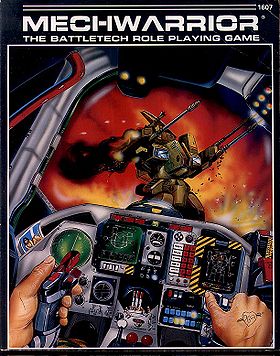
I have seen implementations of that. Still it brings up a few things I haven't seen before, such as the emergency shutter. It also rather expressly states that the specific mech it is taken from to use as an example indicates that convergence is to be set and adjusted manually! This is actually a critical discovery! It has a switch for the "Target Interlock Circuits" for "Adjusting" them and to "reset" them. Interlock is defined as "to fit into each other, as parts of machinery, so that all action is synchronized." A target interlock system is to synchronize the weapon systems to a determined range and adjust the reticle to reflect this.

This means that pilots have a manual means of adjusting convergence distance set behind a switch that must be thrown to 'set' convergence. It also has a quick 'reset' to cancel that convergence and restore a factory default.

This could even be the solution to PGI's "instant convergence" and problems with its "delayed convergence." Manually established and set convergence ranges. With sniper players tinkering with this, brawlers could slip in and strike much more effectively against them, requiring escort players to be set to counter them. Hit and run tactics would be largely more effective. Overall the game would require a much larger skill-based quotient in which the current metas would struggle or even fall apart.

Quote

Ballistic minimum range.

Ok, to explain this I have to remind you that it is not the "Mechwarrior" that "aims" the weapons in the battlemech. Minimum range in the BG is a very abstract and arbitrary thing, but the biggest thing to remember is that its the mech's on board TARGETING COMPUTER relayed through the sensors and configured and calibrated to each of the weapons.

They refer to it as a Targeting and Tracking (computer) Suite or T&T Suite for short. This is standard and separate from Clan "Targeting computers", which are far more than simply computers.

Quote

PPC's, ballistic, and even LRM's do not simply have minimum range because the weapons physically cannot damage mechs (except in the case of LRM's arming only after they have cleared the tubes of the mechs,) but rather, the weapons themselves are calibrated in a way that is equiped for certain roles for the weapon. So a targeting computer calibrated for long range fire on an AC 5 or 2, has trouble tracking targets and calculating trajectories for the weapons as they are mounted and meant to best track targets past a certain range (concider it a minimum convergence of the weapons.)

So as a result, AC's Gauss riles, and various other ballistic weapons don't just get a magic "don't work" box so much as the targeting computer of the mech physically has trouble calculating trajectory on targets that are within a certain distance.

I'm aware that it's an "accuracy" penalty not a "don't work" box. It didn't even take my military experience to know that, it's even called an accuracy penalty which means higher than normal risk of missing.

PGI on the other hand, well PPCs that don't work ought to tell you something. :P The notion of PGI interpreting the Gauss Rifle "minimum range" as a magic don't work box also tells ya something. "It doesn't really make any sense. It isn't just going to not work under 60 meters." ~ Paul Inouye. That's right, it doesn't make any sense, because it isn't a "no go" box. It's an inaccurate range, meaning something is causing it. Paul, indirectly, found a solution to this with the charge up -- probably after reading about the "charge" rules...rather than just common sense. Either way inadvertantly they came up with a system that delays firing in such a way that targets under 60 meters and moving fast are about impossible to hit.

That said... I really like what you've said about AC/2 and AC/5 calibrations being set to high distances.

Before, I took the sources on AC/10s and AC/20s and their given accurate ranges to mean that Battletech effectively doesn't count partial hits (glancing/direct blows aside) given that BT TT is a summary of events. This means that either they missed or didn't hit with enough firepower to do full damage, so it was inconsequential to the summarized simulation. After all who could take the Pontiac 100's "100 shots in under 2 seconds" or the King Crab Death Giver's 4 bursts of 3 shots each before it 'drops' an expended cassette? Both are AC/20s, but imagine having to do 100 'to hit' rolls each time you go to use the Pontiac 100? Even the 4 shot Chemjet Gun or the 5 Shot Tomozuduru (probably misspelled) cannon is asking a bit much for constant 'to hit' rolls.

That encompasses why the max range is so small, even when plainly stated the "actual potential range of Autocannons is several kilometers. However the actual chance of effectively hitting a target as small and as fast as a Battlemech beyond the 'rated' ranges is considered very unlikely for the average pilot." It is explained that Clanners have superior range not because of more effective weaponry, but due to better tracking systems.

Quote

I've often suggested that MWO should adopt a similar motif. Have the minimum convergence on the weapons act as if they where converging on a target at their minimum range if firing on a target within the minimum range.

So say your firing on a stalker within 50 meters with a PPC, well because that PPC is calibrated on the TC to have a minimum effective range of 90 meters, despite having a reticle right on top of a mech, the weapon discharges and attempts to converge at the same point only 90 meters away instead of 50. Making it harder to target individual components and mechs, but not impossible.

That can certainly wreck pinpoint accuracy at close range. But people would complain that you're hurting "brawling" and "wrecking already worthless weapons" (AC/2, AC/5).

PGI's counter logic would be that "Inner Sphere doesn't have targeting computers." :rolleyes:

It makes a solid point and I like this explanation for the AC/2 and AC/5 weapons. It can be something I would use, in conjunction with the manual convergence setup. Which I may work to include a "no convergence" option to allow multiple crosshairs -- one for each system. Doing this would allow cover-based shooting and a higher eschelon of tactics and visual-based stealth gameplay (that guy poking out to shoot can't see much around himself, allowing you to disappear while he's in cover and come out when you're too close; especially since Megamek's double blind 'sensors' are really unreliable in heavily urban and forested environments; for the forest switch to thermal. For the urban areas you can kinda be screwed).

For PPCs, I've heard many explanations, such as:
  • The beam doesn't focus until after 90 meters unless the "field focus controller" is turned off. "PPCs are said to need a certain distance to focus, you can circumvent that by shutting of your field focus controller wich can leed the weapon to backfire." (Japanese Battletech; unknown date and source; taken from a partially provided translation).
  • PPC field inhibitors restrict the dangerous charged·particle feedback produced when PPCs are fired, but also prevent the weapons from finng accurately at targets closer than !heir minimum range. Disengaging a PPC's field inhibitor removes the minimum range modifier for the PPC. but also subjects the firing unit to particle feedback. (BT Tactical Handbook, FASA 1994).
  • "A particle cannon's greatest disadvantages are its mass-- the magnetic coils, generators and cooling units consitute well over half of the 7-ton average weight of most mech-mounted PPC systems-- and the large amount of heat it generates with each use. Particle cannons per shot generate more than twice the heat of any other mech-mounted weapon system in existence, so much heat that mechs that have PPCs mounted as a primary weapon system must seek out large pools of water in which to stand in order to use their weapons to their maximum effectiveness.
    • The PPC's weight adds an additional burden at short ranges. The weapon is so heavy and bulky that it is difficult for the mech to move the weapon quickly enough to align it with rapidly-moving targets at ranges less than about 90 meters. For this reason accuracy tends to decrease at about 90 meters. (1987 US Battletech; as written by William H Keith Jr. [first BT novelist] in the source BattleTechnology; a long time official canonical source until Catalyst Games removed its canonicity to distance itself from the excessive overuse of unseen mech designs and minor conflicts with newer source materials.)
    • (ER PPCs are explained to have less of its weight inside the weapon system itself and it is instead spread more throughout the attached limb, reducing the burden and thus allowing more rapid aiming).
  • PPCs are equipped with a field inhibitor to prevent weapon feedback. This field inhibitor also degrades performance at close range. (Sarna)
  • The Particle Projection Cannon delivers both thermal and kinetic energy in an amount of force so intense that two simultaineously could knock down almost any mech. The amount of heat, energy and feedback generated from doing that, however, would be so intense it could damage electronics, overdraw the reactor, or even kill the pilot. As such many PPCs utilize a two-stage approach. The first stage, the act of which is called "Priming," is to draw a charge and use on-board amplifying generators to magnify this energy. The second stage is to filter the output through the field inhibitor in order to degrade the beam to reduce the potential for any stray feedback. Depending on the model and brand of PPC, the time from activating the weapon to firing can take anywhere between one and three seconds. Deactivating the field inhibitor can shave this time significantly at great risk to the firing unit. (Written by me, taking fluff either directly stated or implied from multiple 1990's novels).
    • This interpretation also incorporates the implication given multiple times that the longer a PPC variant takes to fire, the softer and more pleasant the heat spike can be. Example includes Lord's Light PPC which is said to have taken up to 2 seconds between 'tapping the trigger' and 'discharging'. It also accounts for the ions of PPCs arriving at their targets "almost instantly."
  • "The PPC releases an intense amount of energy that technicians and engineers have not found a way to directly overcome. Eventually, an effort to prevent weapon feedback, was developed in the form of a field inhibitor." "The Field Inhibitor degrades the ion particle beam by allowing the beam to burn off some energy before releasing the kinetic force for full effect." (Paraphrased from unknown source found on a Solaris discussion; the original essentially implied that the beam takes about half a second to 'super heat' the particles in the air, causing the 'lightning effect' after which the kinetic force and other visual traits (such as the Timber Wolf's double helix effect) are then released. Since TT is hit or miss, if you don't get the target with the 'full effect', you missed.)
I have a large array to choose from. Since I plan on having the potential of multiple crosshairs (no convergence), the convergence issue that you're using kinda gets killed there.

Still this weapon is immensely dangerous and I need that minimum range issue.

Especially with the way I plan on breaking down weapons fire based on the lore; PPCs and Gauss Rifles are single handedly the most powerful direct fire weapons in Battletech through the Clan invasion period. After all, AC/20s depending on their variant and caliber such as the 120mm Deathgiver (King Crab version) -- which has two definitions given, one being "3 to 4 shots per second to deal 5 damage" (Thunder Ridge & Wolves on the Border) and "12 shots per 'cassette' or 'round tick on the display' " (Storms of Fate) while remembering that one 'round tick' or 'cassette' = rated damage per use -- means that most weapons are not going to be front-loaded and will be more DPS oriented.)

Quote

Sensor systems.

As part of most military campaigns in Battletech, it is often assumed that as part of a landing operation, a drop ship will deploy a series of military satellites, aeriel spotters, or Drones to act as information gatherers for most mechs.

These spotters are equipped with diagnostic material in the same way that aerial spy drones and satellites work in a modern setting.

While a mech's sensors can also function with this in mind, often times, it is the aerial satellites and spotters that will relay enemy position and designations to the friendly mech. This is why in Battletech it is assumed that information is "shared" about mechs positions and load outs. An absence of these kinds of **** is what tends to prompt "double blind" scenarios.

This is I believe explained in the "Battlespace" source book that came with the box set.


That is very well showcased in Mechwarrior 3 (one of the many reasons why I think it is one of the best mechwarriors; the MechCommanders [overall] and MW1 [for its depictions of between battle information, etc.] also being really good.

It's something I've yet to work out, but I feel it would be very useful in campaign operations. It could even be used as part of the counter-attack / defense campaign against enemy intrusion, either defending or reinforcing weapons intended to take those drones out. In such a case the longer these units are defended or the more of them that can be escorted into position, the better that invader intelligence operations can be hindered.

One tabletop / megamek group I play with has a custom set of rolls for determining how accurate to inaccurate intelligence is and numerous other factors (such as how 'aware' the defending side is -- affecting how immediate the defending forces can respond in kind or if they are caught with their pants down).

Anyway, the DI is just one element of the equation that may have some actual use in a simulation, even if it's just fluff on the board game.

--------

Thank you all for the information. I'll have more things I'd like to look into for the future.

#17 SpiralFace

    Member

  • PipPipPipPipPipPipPipPip
  • The Devoted
  • The Devoted
  • 1,151 posts
  • LocationAlshain

Posted 14 August 2015 - 10:51 AM

Quote

I have seen implementations of that. Still it brings up a few things I haven't seen before, such as the emergency shutter. It also rather expressly states that the specific mech it is taken from to use as an example indicates that convergence is to be set and adjusted manually! This is actually a critical discovery! It has a switch for the "Target Interlock Circuits" for "Adjusting" them and to "reset" them. Interlock is defined as "to fit into each other, as parts of machinery, so that all action is synchronized." A target interlock system is to synchronize the weapon systems to a determined range and adjust the reticle to reflect this.

This means that pilots have a manual means of adjusting convergence distance set behind a switch that must be thrown to 'set' convergence. It also has a quick 'reset' to cancel that convergence and restore a factory default.

This could even be the solution to PGI's "instant convergence" and problems with its "delayed convergence." Manually established and set convergence ranges. With sniper players tinkering with this, brawlers could slip in and strike much more effectively against them, requiring escort players to be set to counter them. Hit and run tactics would be largely more effective. Overall the game would require a much larger skill-based quotient in which the current metas would struggle or even fall apart.


I don't really think this is part of an "Active" kind of setting that they set mid battle so much as a "factory restart" in the event that your mech freezes up on you in the field.

Always remember, the Mechwarrior only has a limited degree of control of the mech. His neuro feedback is not the thing that is keeping the mech up, its the Gyro's utilizing the MW's seance of balance to calibrate the mech's own balance. Same with weapons, The mechwarrior can raise arms and exude a certain degree of control of the mech through the neurohelmet and the control sticks, but these are just inputs that the mech itself has to calculate and calibrate for.

In the novels, you will hear descriptions of the mechwarrior placing the reticle over an enemy mech and waiting for his reticle to go "golden" after a few seconds on the mech signifying the targeting computer has adjusted the mechs weapons to input what the mechwarrior wanted it to do. The Mechwarrior himself isn't the one aiming each of the individual weapons, its the mech.

But through the coarse of battle, the TC can end up being "miss calibrated" due to many things from PPC discharges, damage misaligning sensor tools used by the TC, or just flat out computer errors (who hasn't had to do a "reboot" because of clunky usage.) The things you are describing I think is more of a "flushing" kind of thing to essentially "reboot" the system's calibrations in the event that something within the mech is going terribly wrong.

Something you might find interesting though is that the Targeting computer calibration is something that HAS had advance tech rules in the past. Specifically from the "Max tech" rules, which allow your techs to set the calibration for weapons with min/ ranges (hot loading LRM's, re-calibrating AC's,) As well as configuring the core computer to have different ways of treating the "ranged brackets." (Things like at long range, you get 0 to hit, but +6 at short range, and things like that.)

But this kind of calibration is done by the techs while the mech is under maintenance. This is not something that can be done on the fly from the mechwarriors side. As it typically means not only re-calibrating the Targeting computer itself, but all the weapon gun cams / sensors that feed their data into the TC that allows it to calculate where it is aiming in the first place


1 user(s) are reading this topic

0 members, 1 guests, 0 anonymous users